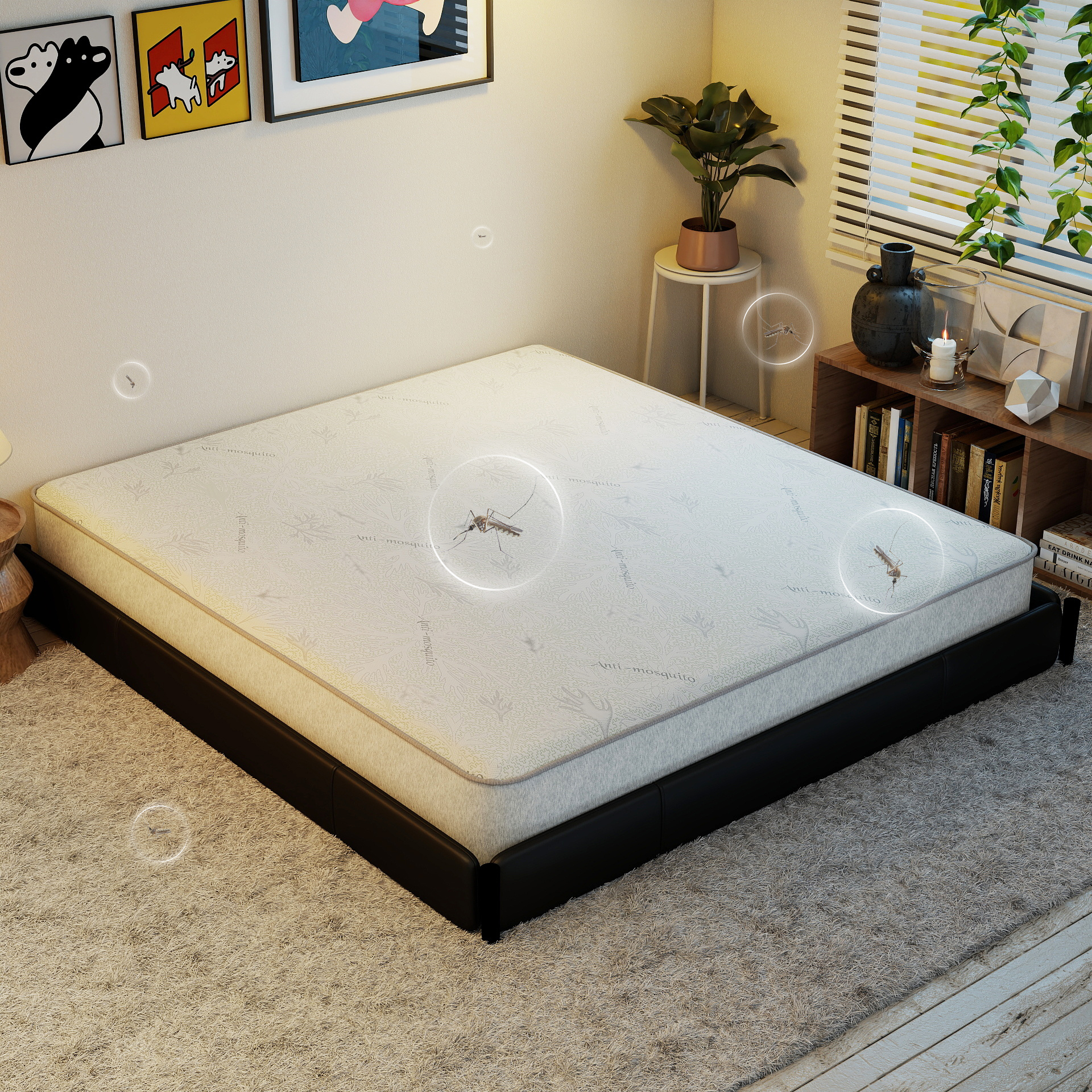
Is Mosquito Protection Still Only a Spray? Why Modern Mattress Brands Are Moving Mosquito Defense into Fabrics
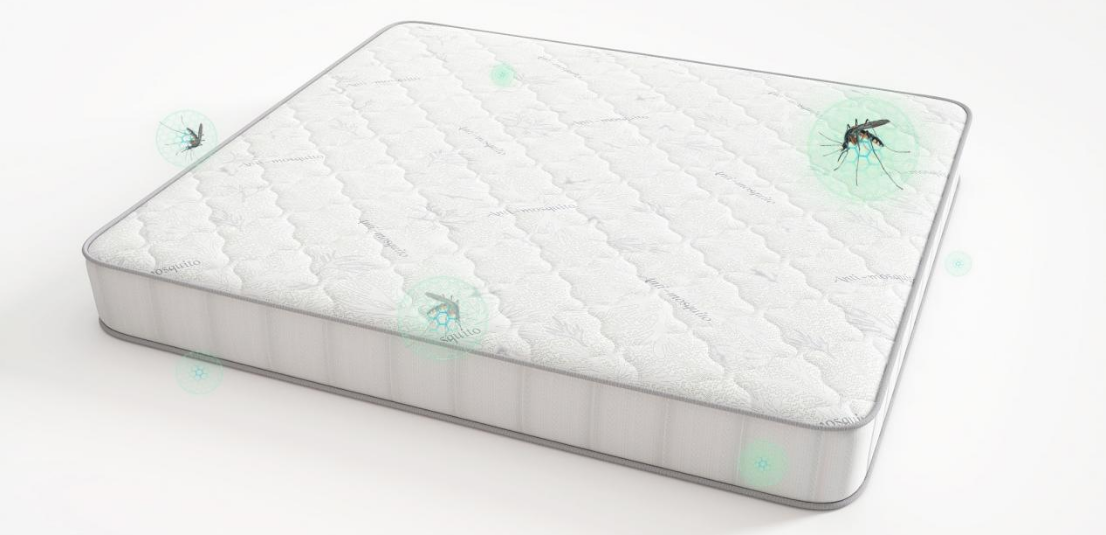
Why Modern Brands Are Moving Mosquito Defense into Fabrics
Mosquito bites are no longer just an outdoor inconvenience.
For apparel, home textiles, and outdoor product brands, they represent a functional gap that traditional solutions fail to close.
Mosquito-repellent textile finishing marks a shift from short-term, user-dependent protection to long-lasting, fabric-level defense.
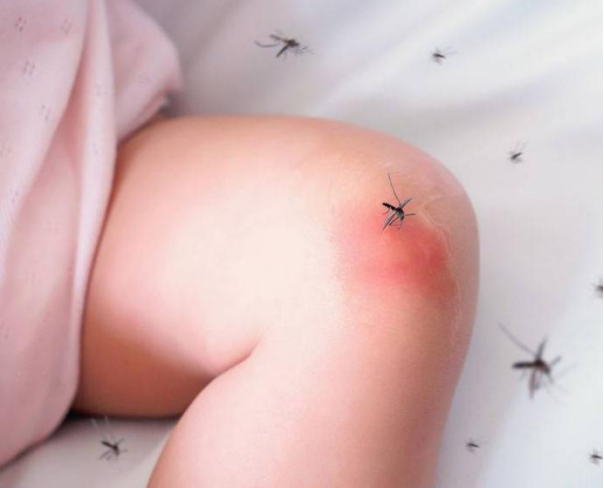
1. Hero Section — A Problem the Market Already Feels
Consumers reapply sprays.
Brands deal with complaints.
Protection still disappears after hours.
The issue isn’t awareness — it’s the protection method.
And increasingly, the answer lies in the fabric itself.
2. Problem Definition — Why Traditional Mosquito Protection Falls Short
Consider real-world usage scenarios:
Outdoor apparel worn for long hours

Children’s clothing where skin application is undesirable
Curtains, soft furnishings, and camping gear with no practical way to apply repellents
Common Industry Assumptions
“Skin repellents are enough”
“Mosquito protection is seasonal”
“Textiles can’t deliver lasting efficacy”
The overlooked reality:
Topical repellents are temporary, inconsistent, and user-dependent. Once washed off, sweated out, or forgotten, protection ends.
For brands, this creates:
Unstable performance claims
Inconsistent user experience
Limited differentiation in functional categories
3. Fabric Science Explained — What Mosquito-Repellent Textile Finishing Is “What Is Mosquito-Repellent Textile Finishing?”.
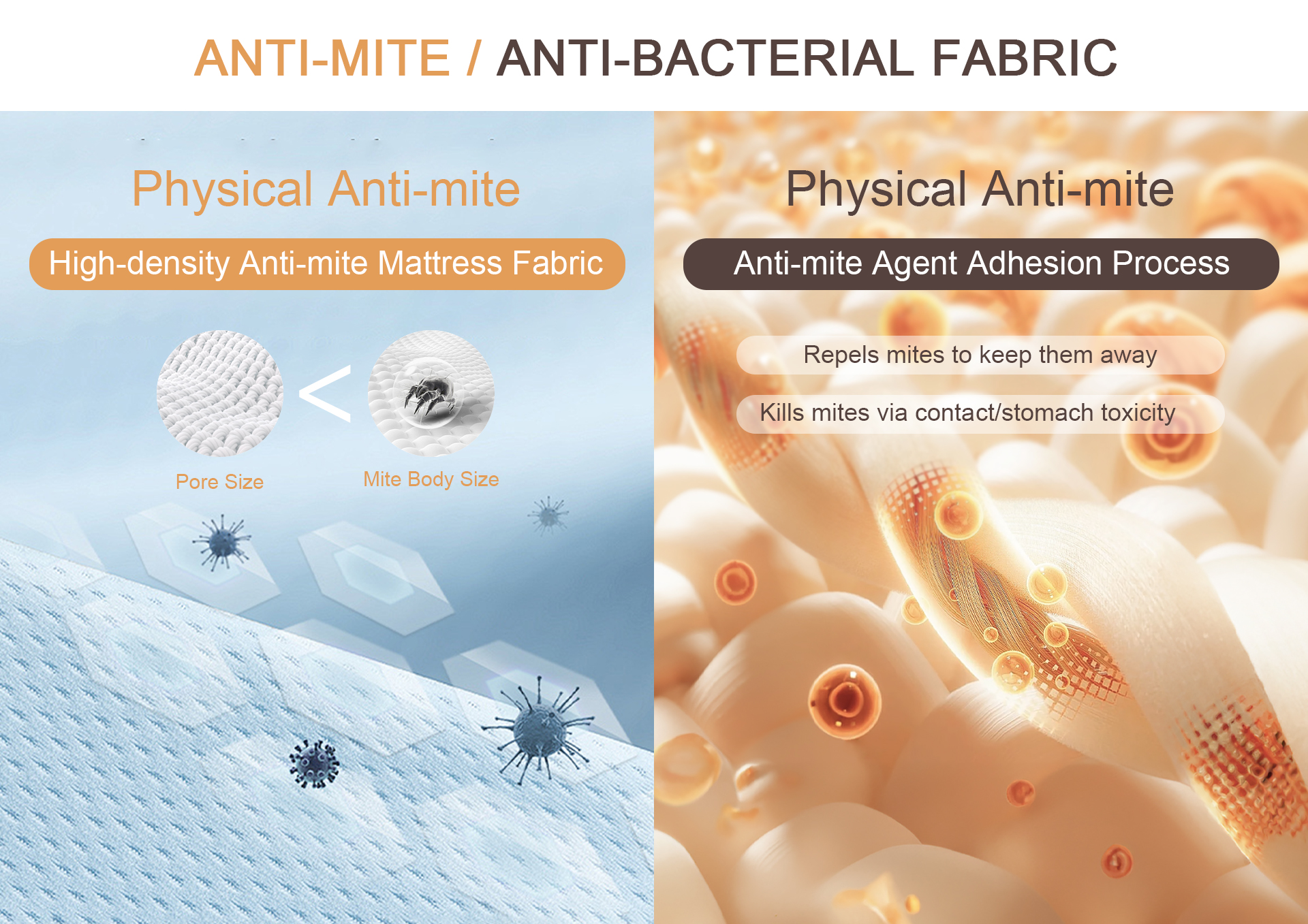
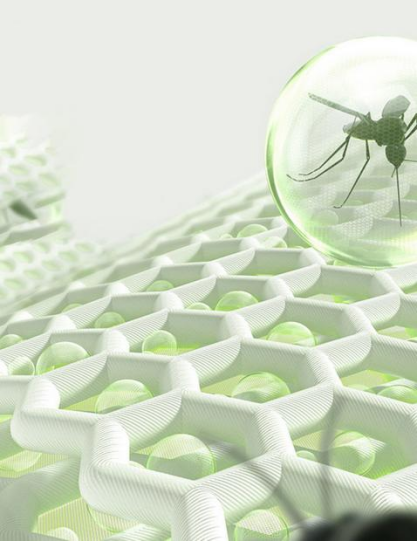
It is a post-finishing textile technology that fixes high-efficiency, safety-validated mosquito-repellent active ingredients onto textile fibers through chemical or physical bonding.
How It Works
Instead of applying protection to skin:
The fabric itself becomes the protective layer
Active ingredients remain fixed on fibers
Mosquitoes are repelled or neutralized upon contact
Think of it as upgrading from temporary application to built-in functionality.
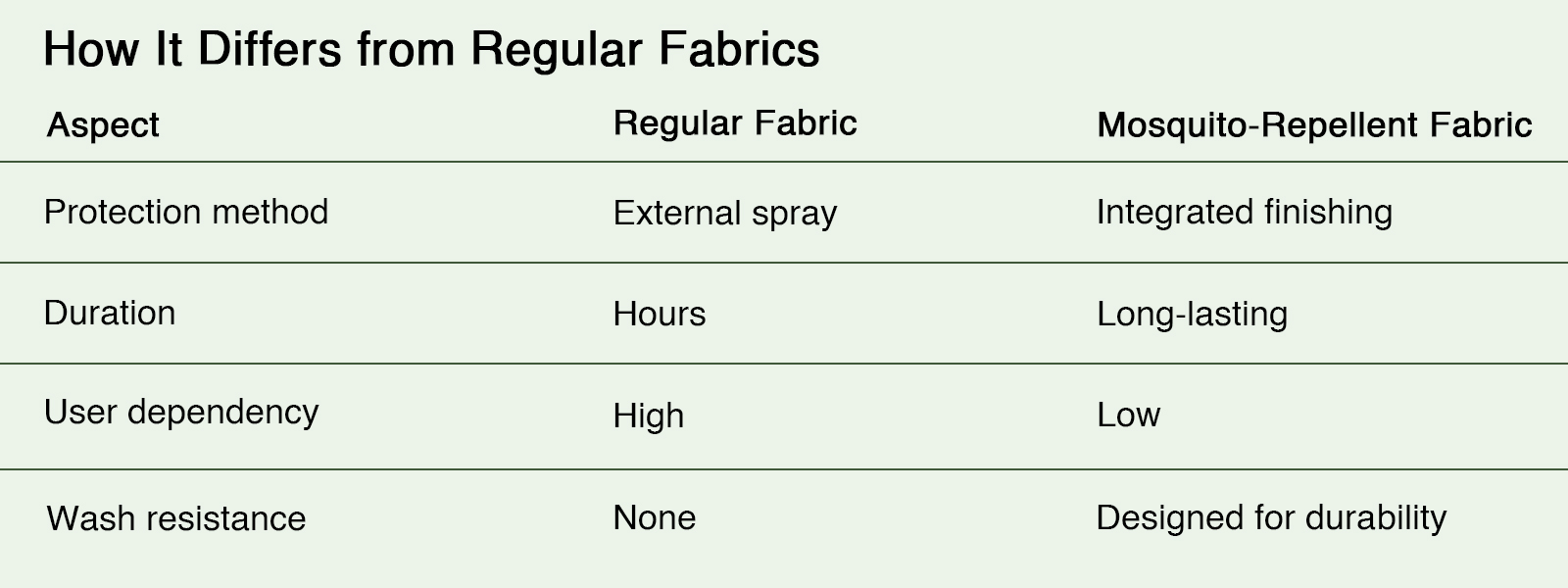
How It Differs from Regular Fabrics
4. The Proven Active Ingredient Behind the Technology
Most mature mosquito-repellent textile systems are based on Permethrin, a synthetic pyrethroid developed by mimicking natural chrysanthemum compounds.
Why Permethrin Is Widely Used:
High efficacy against mosquitoes
Strong stability on textiles
Suitable for industrial finishing
It is internationally recognized and approved for textile use by organizations such as the World Health Organization, the U.S. Environmental Protection Agency, and the Centers for Disease Control and Prevention — making it a trusted choice for global markets.
5. Best Use Scenarios — Where Fabric-Level Protection Makes Sense
Mosquito-repellent textile finishing is particularly suitable for:
Outdoor & travel apparel – Continuous protection without reapplication
Children’s products – Reduced need for skin contact repellents
Home textiles – Curtains, upholstery, soft furnishings
Camping & leisure goods – Tents, sleeping bags, accessories
Tropical & seasonal markets – Stable performance across climates
For brands, this translates into clear functional positioning rather than add-on features.

6. Product Bridge — SU-PL Mosquito-Repellent Finishing Agent
If you’re looking for an industrial-ready solution, SU-PL is developed specifically for textile post-finishing applications.
Why SU-PL Fits Brand & Manufacturing Needs
1.Imported, high-concentration formulation
2.Applicable to all textile types
3.Compatible with: Fluorocarbon finishes Flame-retardant systems
4.All common textile resins and softeners
The finishing integrates seamlessly into existing production lines without compromising fabric hand feel or appearance.
7. Care, Durability & Production Stability
Designed for long-lasting mosquito-repellent performance
Suitable for repeated handling and washing
Does not alter fabric comfort or breathability
Supports scalable, repeatable production
This makes the technology suitable for OEM and ODM product development.
8. FAQ — Common Questions from Brands & Developers
Is mosquito-repellent finishing safe for daily-use textiles?
Yes. The formulation has undergone comprehensive independent testing and aligns with international safety recognition for textile applications.
Can performance be verified?
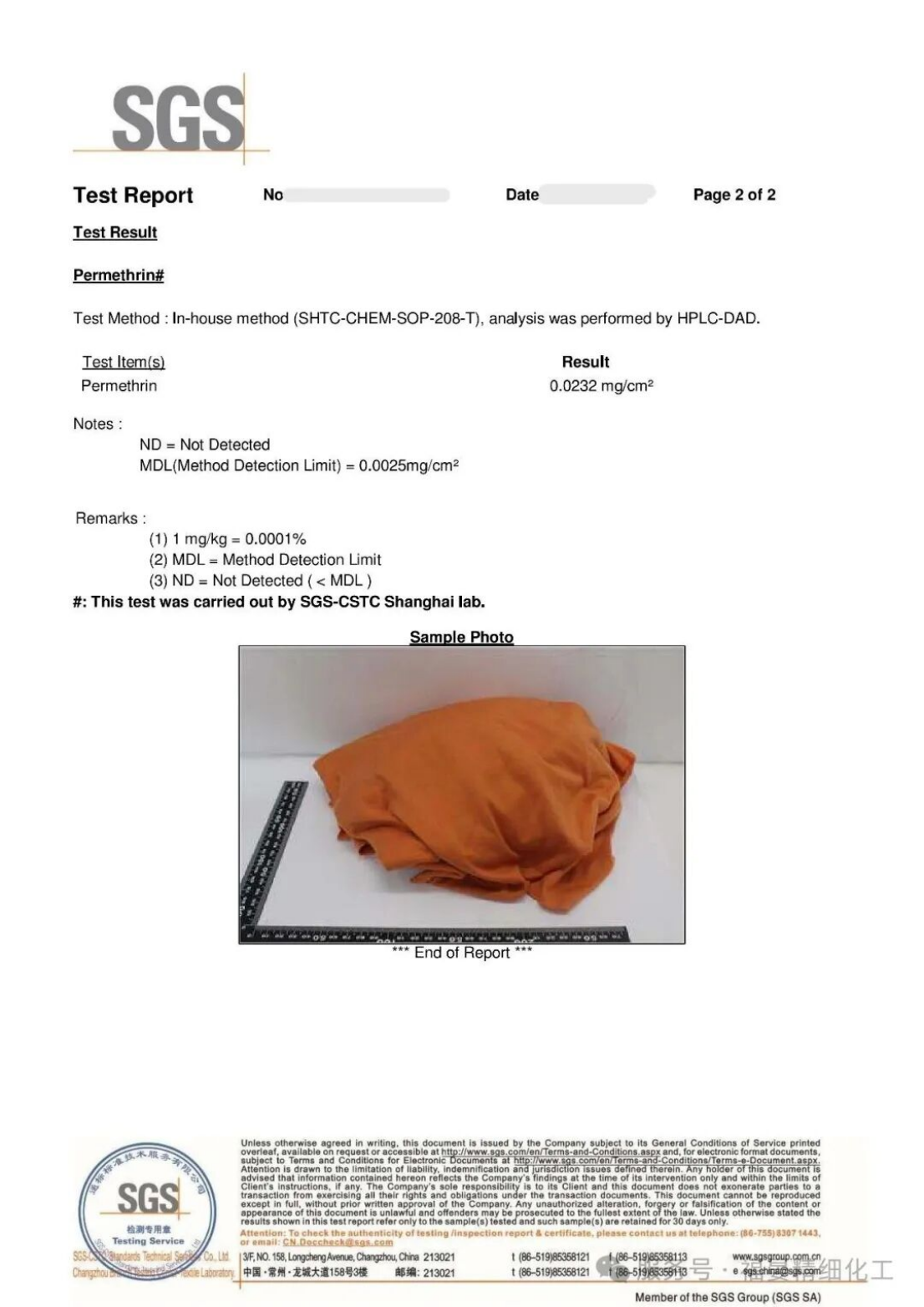
Yes. Fabrics can be sent to qualified third-party laboratories to evaluate mosquito repellency rates.
Does it limit other finishing functions?
No. SU-PL is designed for compatibility with common functional finishes used in modern textiles.
9. Soft Close — Where Functional Textiles Are Heading
Functional textiles are no longer defined by coatings that wear off or features users must remember to apply.
They are defined by what the fabric does on its own.
By moving mosquito protection into the textile layer, brands gain durability, credibility, and real-world usability — exactly what modern markets expect from functional fabric solutions.


 Do you produce OEM/ODM brands or designs?